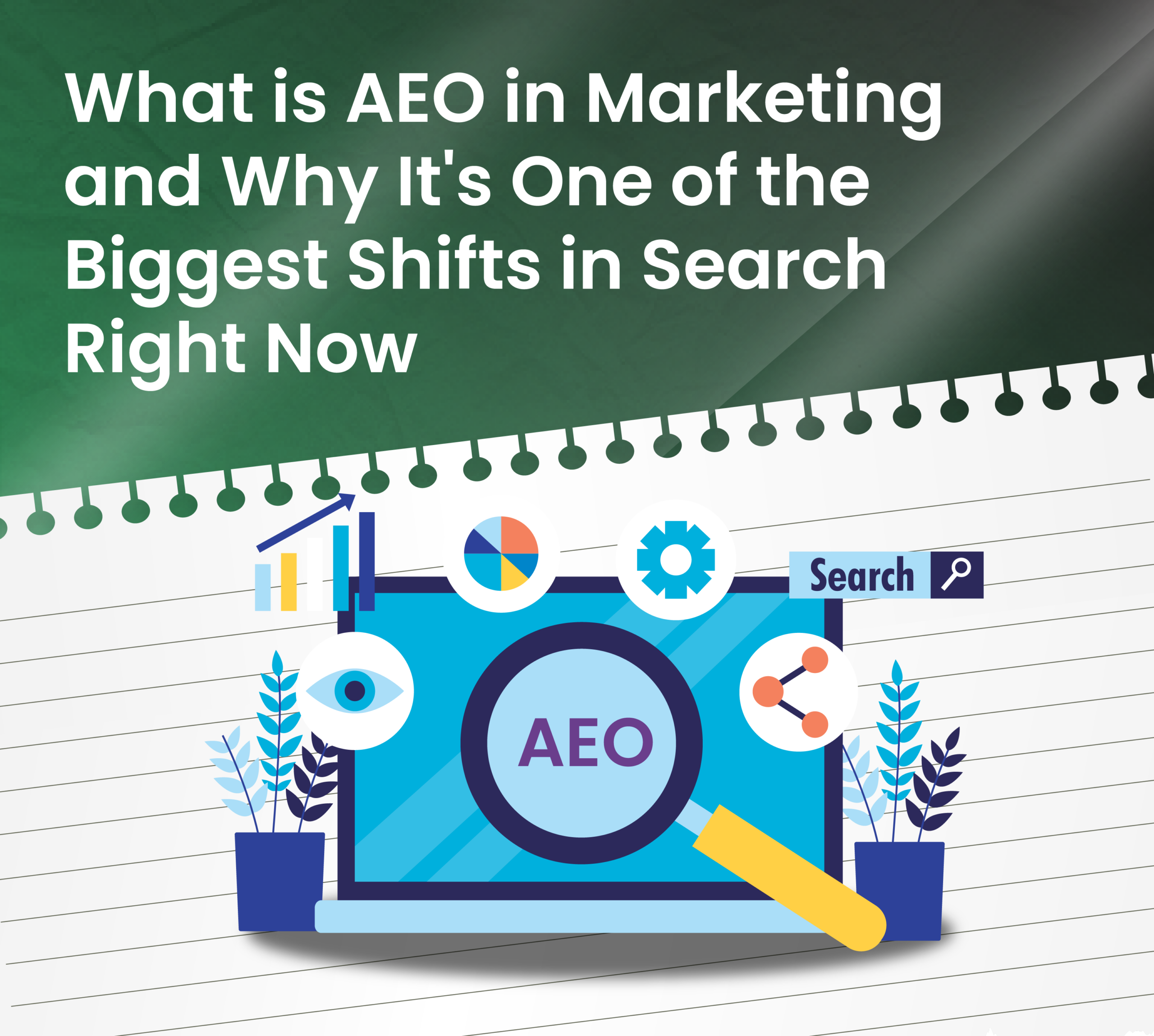
Search is no longer a list of ten blue links. It’s a conversation. And in 2026, the brands winning that conversation aren’t just the ones with the most backlinks. They’re the ones that have mastered Answer Engine Optimisation, or AEO.
AEO in marketing is the discipline of making your content the preferred source for AI-generated answers across platforms like ChatGPT, Google AI Overviews, Perplexity, and Microsoft Copilot. If you haven’t built an AEO strategy yet, now is the time. Here’s what it means, why it matters, and how to do it.
What is AEO in Marketing? A Clear Definition
AEO stands for Answer Engine Optimisation. It refers to the practice of structuring and presenting content so that it is selected, cited, or synthesised by AI-powered answer engines in response to user queries.
Where traditional SEO focuses on ranking a page in a list of search results, AEO in marketing focuses on getting your content surfaced as the answer itself: in a featured snippet, an AI Overview, a voice assistant response, or a chatbot recommendation.
The distinction matters. A ranked result is a door your audience might open. An answer is the information they receive before they ever decide to look further. In a world where millions of people query AI search engines before they run a traditional search, being the answer is a fundamentally different and more powerful competitive position.
AEO vs SEO: What's the Difference?
SEO and AEO marketing are not opposing strategies. They’re layers of the same discipline. But they operate differently and reward different types of content.
Dimension | Traditional SEO | AEO |
Primary Goal | Rank high in search results | Become the cited answer |
Content Format | Keyword-rich, structured pages | Direct answers, conversational Q&A |
Success Metric | Click-through rate, ranking position | AI citations, brand mentions in answers |
Trust Signal | Backlinks, domain authority | E-E-A-T, structured data, reputation |
Query Type | Short keyword phrases | Long, conversational, intent-driven |
The brands winning in 2026 aren’t choosing between SEO and AEO optimisation. They’re building integrated strategies where each reinforces the other.
Why AEO Has Become a Critical Marketing Strategy in 2026
Several converging forces have pushed AEO strategy from an emerging concept to a boardroom priority this year:
- AI search adoption has accelerated. Google AI Overviews now appear on a significant share of commercial queries in major markets. Perplexity has grown rapidly since 2024. ChatGPT’s search feature handles millions of queries daily.
- Zero-click behaviour is mainstream. Users increasingly receive answers without clicking through to a source. If your brand isn’t in the AI-generated answers, it’s invisible at the moment of highest intent.
- Voice and conversational search are growing. Smart devices and AI assistants continue to expand. Conversational, answer-first content is required to capture this audience.
AI influences purchase decisions directly. Consumers who discover brands through AI recommendations convert at higher rates than those who discover via traditional organic search. Being the answer isn’t just a visibility win: it’s a conversion advantage.
The Core Pillars of Answer Engine Optimisation
1. Structured, Direct Answers
AI engines prioritise answer-first content that answers questions clearly and immediately. Every page targeting a query should open with a direct, concise answer (ideally 40 to 60 words) before expanding into supporting context.
2. Schema Markup and Structured Data
Schema markup is a cornerstone of any AEO SEO strategy. FAQ schema, HowTo schema, Article schema, and Product schema all help AI search engines parse your content with precision. This is one of the highest-leverage technical investments you can make for AEO.
3. E-E-A-T: Experience, Expertise, Authoritativeness, Trustworthiness
Google’s quality framework directly influences whether AI Overviews cite your content. Content authored by demonstrated subject matter experts, supported by credible sources, and published on reputable domains earns disproportionate AI search visibility.
4. Topical Authority
A single article rarely wins AI citations in search. A comprehensive content cluster covering every angle of a topic signals deep expertise. Answer engine optimisation rewards brands that have built genuine topical depth.
5. Consistent Brand Signals Across the Web
AI doesn’t just read your website. It synthesises everything available: reviews, directory listings, press mentions, social profiles. Consistent brand information across every touchpoint builds the trust signal that AI-powered search engines need to recommend your brand confidently.
How to Implement an AEO Strategy Step by Step
- Audit your most important pages for direct answer structure. Rewrite introductions to lead with concise, clear answers.
- Research questions your audience asks in AI tools and search engines. Tools like AlsoAsked, AnswerThePublic, and Google’s People Also Ask are strong starting points.
- Build or expand FAQ sections across your site. Every frequently asked question is an AEO opportunity.
- Implement schema markup for AEO systematically: starting with FAQ, HowTo, and Article schemas on your most trafficked content.
- Audit your brand’s digital footprint: business listings, review profiles, directory entries, social bios. Ensure consistency everywhere.
- Build topical authority clusters: map out the key questions in your space and create answer-first content that answers each one comprehensively.
AEO for Different Business Types
- B2B brands should prioritise thought leadership content, detailed case studies, and FAQ content targeting procurement-stage queries.
- E-commerce brands should focus on product schema, review optimisation, and comparison content that appears in AI-generated answers for product recommendations.
- Service agencies should build content around the specific questions their ideal clients ask when evaluating providers and make those answers as clear and direct as possible.
- Local businesses should ensure Google Business Profile accuracy and build locally-relevant FAQ content targeting queries like ‘best [service] near me.’
Common AEO Mistakes to Avoid
- Writing for length, not clarity. Longer isn’t better in AEO marketing. Clearer is better.
- Ignoring schema markup. This remains one of the most underutilised technical tools, and one of the most powerful for answer engine optimisation.
- Treating AEO as separate from SEO. The most effective AEO SEO strategy integrates both with shared content architecture and overlapping technical implementation.
- Inconsistent brand information. A mismatched phone number between your website and Google Business Profile can erode AI search visibility. Audit everything.
- Publishing without author credibility signals. Anonymous or underqualified content rarely earns AI citations in search. Show the expertise behind the content.
How IMS nHance Builds AEO Strategies for Brands and Agencies
At IMS nHance, AEO in marketing is now a core component of every content and SEO strategy we build for clients. Our approach combines content structure optimisation, technical schema markup for AEO, brand footprint auditing, and topical authority mapping: all calibrated to the specific AI platforms most relevant to each client’s audience.
We don’t treat AEO as a bolt-on. We build it into the foundation of digital marketing strategies from day one, because the brands that start now will have compounding advantages over those who adopt it later.
Conclusion
AEO in marketing is the discipline of making your brand the answer, not just a search result. In 2026, as AI tools increasingly mediate the relationship between your audience and your brand, this distinction is the difference between being discovered and being invisible.
The strategic window to build AEO strategy advantage is now. The brands and agencies investing in answer engine optimisation today are positioning themselves for disproportionate visibility as AI search continues to grow.
Your competitors are already being cited by AI. Is your brand? Talk to IMS nHance about building your AEO strategy.